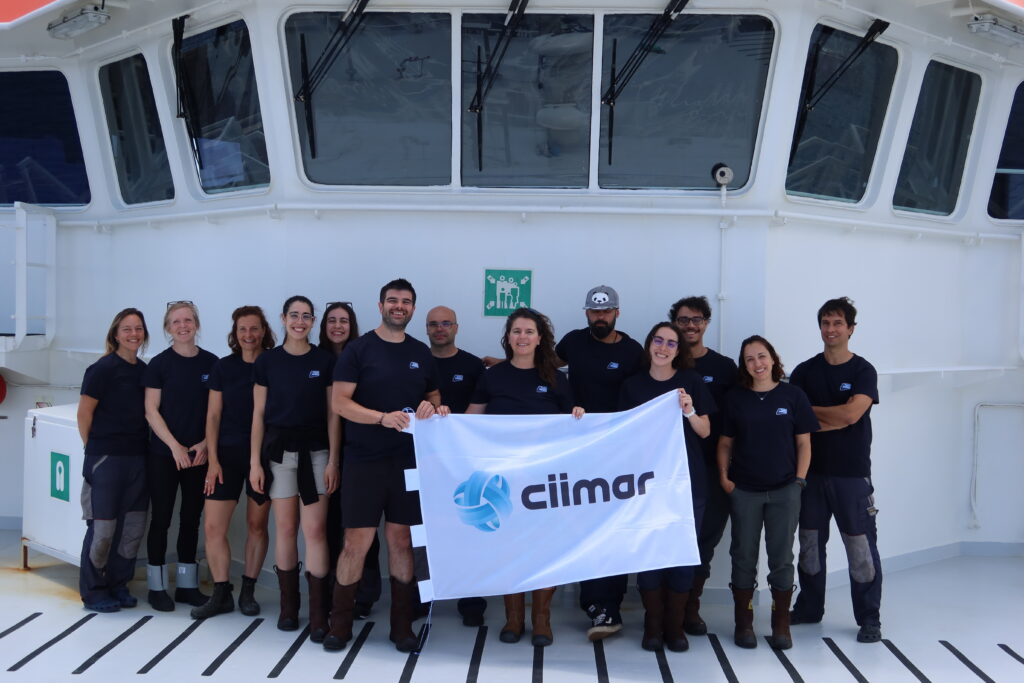

TwinDEEPS team embarked on its scientific expedition to the Gorringe bank, one of the tallest submarine mountains of the Atlantic. Departing from the Canary Islands, the expedition spent around two weeks exploring the Gorringe bank aboard NIOZ’s research vessel RV Pelagia bringing together expertise and technology from across the consortium.
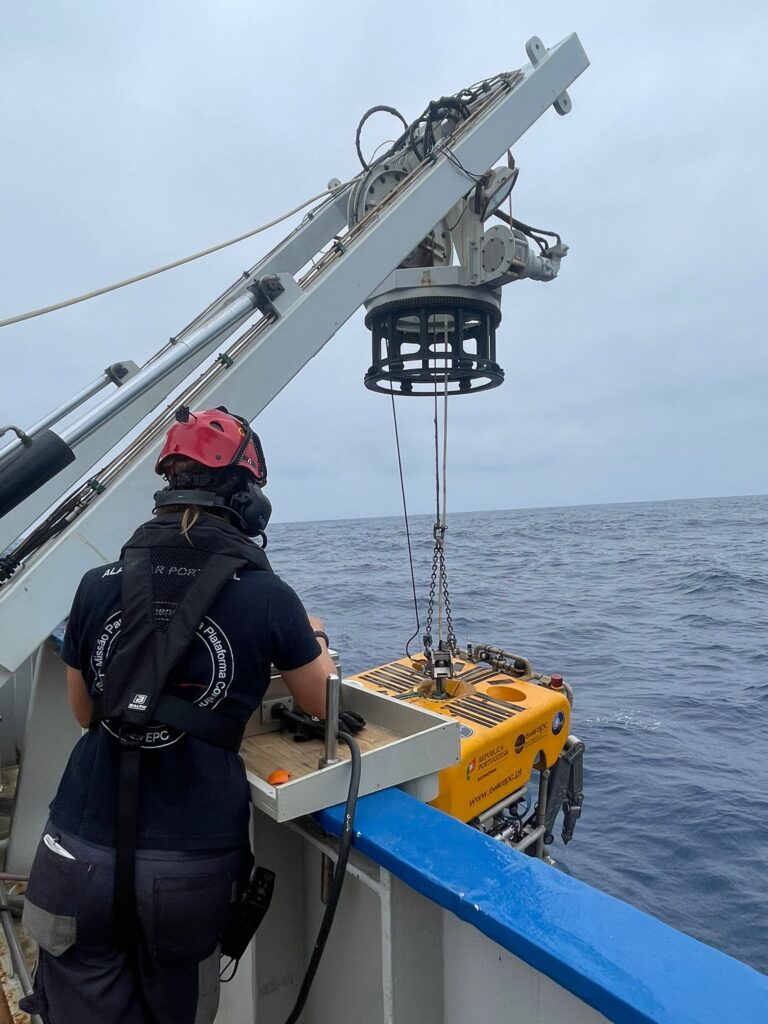
Over the course of 12 days, the team deployed a variety of observation tools, from CTD casts to study and sample the water column to the remotely operated vehicle (ROV) LUSO to collect high-definition imagery and biological samples from the seafloor.
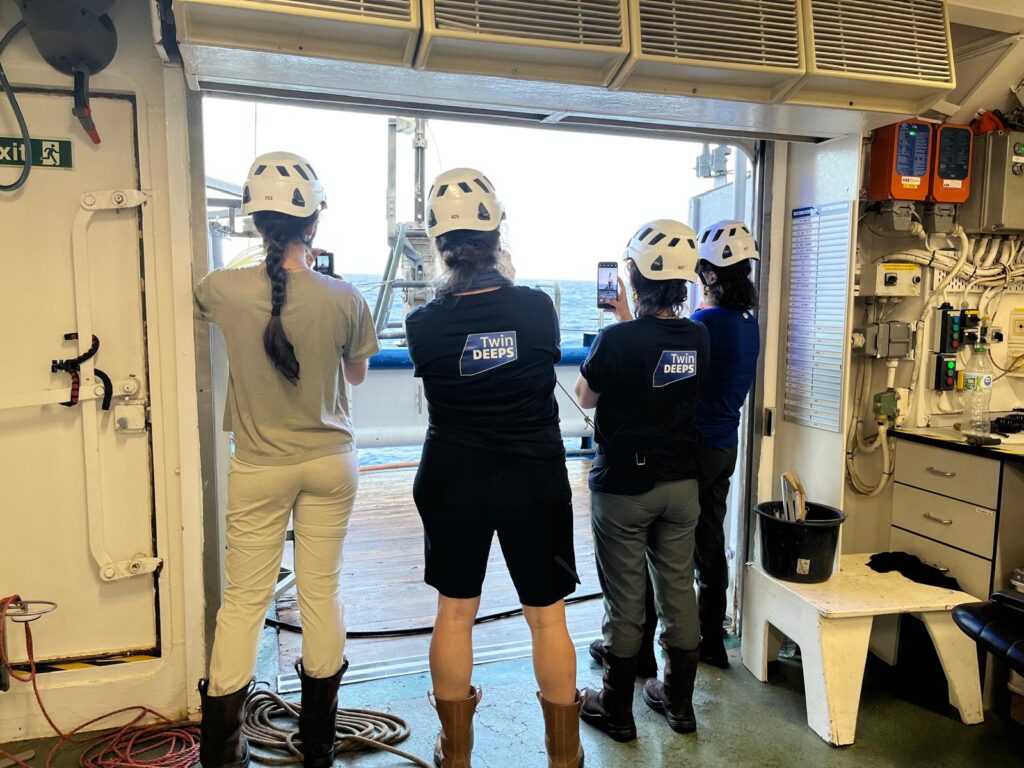
Working 24/7, the scientific team and ship’s crew collaborated to ensure the success of each operation. At the same time, early career researchers received hands-on training in the use of advanced technology for data and sample collection, a key component of TwinDEEPS’ commitment to capacity building and knowledge sharing.
In total, 18 dives and 25 CTD casts were made to explore and characterise the benthic and pelagic habitats of the Gettysburg seamount between 50-1750 m depth. Water, sediment and biological samples collected during the expedition, alongside data on many environmental parameters are now being analysed in the various labs, to understand how species and habitats are distributed on the seamount and how anthropogenic stressors, from fisheries to emergent contaminants, may be impacting this unique ecosystem. The expedition was co-designed with public authorities responsible for marine conservation and spatial planning, to ensure that relevant knowledge gaps would be filled and thus contribute directly to the management of this soon to be Marine Protected Area.
The expedition ended with a seminar at CIIMAR headquarters and guided tours to the ship open to the community and the media to share more about this seamount and the project.
Find out more on the Gorringe Bank Expedition page and stay tuned as we share our findings about this incredible biodiversity hotspot.